Selecting the right Police Reflective Vest in 2026 requires more than choosing the brightest color. Global buyers must examine visibility, comfort, durability, fit, and regional safety requirements. A vest used beside a wet highway faces different conditions from one worn during daytime patrols. Rain can flatten reflective performance. Heat can make heavy fabric uncomfortable. Poor sizing can restrict movement during routine duties.
Dr. John D. Bullough, a respected visibility researcher at the Lighting Research Center, has emphasized a practical principle: “Being seen is not enough; people must be recognized in time.” This idea matters when comparing fluorescent backgrounds, reflective tapes, contrast panels, and night-time visibility. A strong Police Reflective Vest should help drivers identify a person, not merely notice a bright shape. That difference is easy to overlook.
This guide examines vest types for police departments, traffic teams, emergency personnel, and professional buyers. It considers mesh designs, weather-resistant fabrics, breakaway options, adjustable closures, pocket layouts, and reflective pattern placement. Buyers should also request test reports, material specifications, washing guidance, and supplier traceability. Local standards must be checked before purchase because requirements vary between countries and agencies.
Some choices remain imperfect. More reflective material may improve visibility but reduce ventilation. More pockets may increase usefulness but add weight. A low price can appear attractive, yet replacement costs may rise after repeated washing. The best decision balances measured performance with real working conditions. That balance deserves careful review, not a rushed catalog order.
Police Reflective Vest Types and Their Core Functions
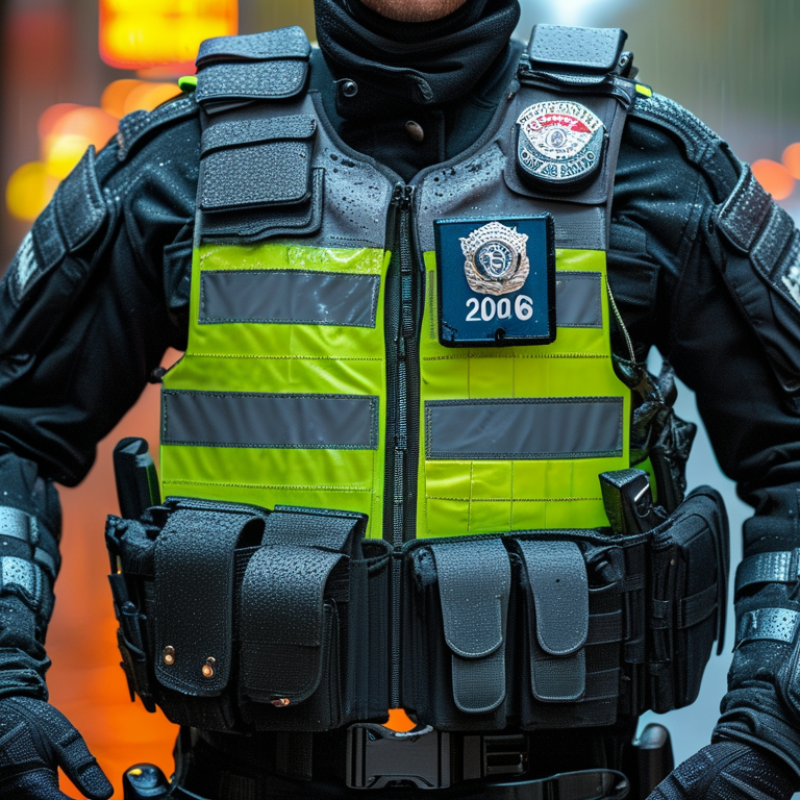
Police reflective vests support visibility, role recognition, and practical movement during authorized public-safety duties. High-visibility mesh vests suit warm climates because their open fabric improves airflow. Solid-front vests offer better wind resistance and clearer printed identification. Multi-pocket versions help officers carry notebooks, radios, gloves, or inspection tools without restricting movement. Some designs include adjustable side closures for different uniforms and body shapes. A useful vest should remain visible at dawn, under vehicle headlights, and during light rain. Bright color alone is not enough.
Tips: Check reflective tape width, stitching, closure strength, and size accuracy before purchase. Test the vest over the actual uniform. Look for certified materials and follow local visibility requirements. Avoid excessive pockets. They can add weight and reduce comfort.
Global buyers should compare vest types with their operating environment. Urban traffic teams may need broad reflective bands and clear front and back identification. Outdoor units may prefer breathable mesh, water-resistant fabric, and reinforced shoulder areas. A removable panel can support changing assignments, but it may loosen after repeated washing. This detail is easy to overlook. Inspectors should review washing instructions, color stability, and tape performance after regular use. No vest solves every visibility problem. Poor fit, blocked markings, or damaged reflective strips can reduce its value quickly. A practical trial with real uniforms and nighttime lighting remains more reliable than judging photos alone.
| Reflective Vest Type | Core Function | Best Use Environment | Visibility Features | Typical Materials | Relevant Standards or Classes | Global Buyer Considerations |
|---|---|---|---|---|---|---|
| Basic High-Visibility Police Vest | Improves officer conspicuity and identifies the wearer during traffic control, patrol support, and public-safety operations. | Daylight operations, urban patrol, road checkpoints, and event security. | Fluorescent yellow, orange, or red background with horizontal and vertical retroreflective bands. | Polyester mesh, woven polyester, or lightweight coated fabric. | ANSI/ISEA 107 Type R or P EN ISO 20471 |
Confirm the required color, reflective area, test method, and labeling rules in the destination market. |
| Class 2 Traffic Police Vest | Provides enhanced visibility for personnel working near moving vehicles or in areas with moderate traffic risk. | Roadside enforcement, intersections, transport hubs, and daylight or low-light traffic duties. | Greater high-visibility material coverage than a basic vest, with reflective bands around the torso and shoulders. | High-visibility polyester fabric or breathable mesh with durable reflective tape. | ANSI/ISEA 107 Type R Class 2 EN ISO 20471 Class 2 |
Class definitions are not interchangeable across all countries; request laboratory test reports for the claimed standard. |
| Class 3 High-Visibility Police Vest | Maximizes visual recognition where officers need to be visible from multiple directions and at greater distances. | Night operations, high-speed roadways, poor weather, and complex traffic environments. | Large fluorescent areas, sleeves or additional body coverage, and continuous reflective detailing. | Fluorescent woven fabric, mesh panels, reflective tape, and sometimes weather-resistant outer layers. | ANSI/ISEA 107 Type R Class 3 EN ISO 20471 Class 3 |
Check whether the design provides the required visibility in the front, back, and side views. |
| Breakaway Reflective Vest | Allows the vest to separate quickly if it is caught, pulled, or snagged, helping reduce entanglement risk. | Crowd control, transportation areas, tactical support, and duties near machinery or vehicle equipment. | High-visibility fabric and reflective bands combined with breakaway shoulder and side closures. | Polyester mesh or woven polyester with hook-and-loop or snap breakaway sections. | Visibility standard depends on the tested design | Verify that breakaway performance does not reduce visibility, fit security, or load-bearing capability. |
| Mesh Breathable Reflective Vest | Maintains high visibility while improving airflow and reducing heat buildup during extended wear. | Hot climates, summer patrols, traffic duty, outdoor events, and long shifts. | Fluorescent mesh body with segmented or solid retroreflective tape. | Open-hole polyester mesh, lightweight binding, and reflective trims. | ANSI/ISEA 107 when certified EN ISO 20471 when certified |
Assess mesh strength, seam durability, colorfastness, and visibility after repeated washing. |
| Weather-Resistant Reflective Vest | Combines visibility with basic protection from wind and light rain during outdoor police operations. | Wet climates, winter patrols, roadside work, and extended outdoor assignments. | Reflective bands placed on a fluorescent, wind-resistant, or water-repellent outer shell. | Coated polyester, laminated fabric, breathable membrane, or lightweight softshell material. | EN ISO 20471 or ANSI/ISEA 107 as tested | Do not treat water resistance as waterproofing; review hydrostatic pressure, breathability, and seam construction. |
| Utility or MOLLE Reflective Vest | Provides visibility together with attachment points for radios, identification panels, lights, medical items, or duty accessories. | Traffic enforcement, incident command, search operations, and equipment-intensive assignments. | High-visibility panels and reflective bands integrated with webbing or modular attachment fields. | Polyester mesh or fabric, nylon webbing, hook-and-loop panels, and reinforced stitching. | Visibility certification is design-specific | Check total weight, load distribution, attachment strength, radio access, and compatibility with existing duty equipment. |
| Identification and Command Vest | Communicates the wearer’s role, such as police, supervisor, incident commander, or traffic officer, at a glance. | Public events, emergency response, multi-agency operations, and large incident scenes. | Fluorescent base color, reflective bands, large front and back text panels, and optional role markings. | Polyester mesh or woven fabric with printed, heat-transferred, embroidered, or hook-and-loop identifiers. | Visibility standard depends on the garment configuration | Use clear multilingual identification where required and confirm that lettering does not cover the certified reflective area. |
| High-Visibility Ballistic Carrier Cover | Improves the wearer’s visibility while accommodating a compatible protective carrier or armor system. | Specialized traffic operations, public-order support, and assignments requiring both visibility and protective equipment. | High-visibility outer cover with reflective bands, identification panels, and adjustable closures. | Fluorescent polyester or nylon outer shell with reinforced fabric and modular adjustment areas. | Visibility requirements are separate from ballistic performance | Visibility certification does not certify armor protection; verify fit, carrier compatibility, heat management, and independent armor testing. |
| LED or Light-Assisted Reflective Vest | Adds active lighting to improve recognition when retroreflective material alone may be insufficient. | Night patrols, tunnels, low-visibility emergencies, and high-risk roadside operations. | Retroreflective tape combined with battery-powered LED strips or warning lights. | Polyester textile, reflective tape, LED modules, wiring, rechargeable or replaceable battery systems. | Textile visibility and electrical safety require separate evaluation | Review battery runtime, charging method, ingress protection, electrical safety, washability, and local transport regulations. |
| Cold-Weather High-Visibility Vest | Provides visibility over warm clothing while supporting insulation and weather protection in cold conditions. | Winter patrols, snow operations, cold-region traffic control, and outdoor emergency response. | Fluorescent insulated body with reflective bands positioned for visibility over layered clothing. | Quilted polyester, insulated lining, coated outer fabric, and reflective tape. | EN ISO 20471 or ANSI/ISEA 107 when certified | Allow sufficient garment ease for layers and evaluate insulation, moisture management, reflective performance, and storage needs. |
| Reversible Reflective Vest | Offers two functional appearances, such as high visibility on one side and a lower-profile or role-specific side on the other. | Flexible patrol teams, changing operational conditions, and shared equipment programs. | Reflective and fluorescent treatment on one or both sides, depending on the tested configuration. | Double-layer polyester, mesh, reversible binding, and reflective tape. | Certification applies only to the specified wearing configuration | Confirm that both sides meet the intended use requirements and that reversible construction does not compromise fit or durability. |
: Lightweight mesh suits hot, humid patrol areas. Heavier woven fabric offers better abrasion resistance. It may feel warmer during long shifts.
Fluorescent yellow or orange improves daytime recognition. Color alone is not enough. Reflective bands must support visibility at night.
Place wider bands around the torso and shoulders. Vertical strips can show body movement more clearly. Coverage matters more than decoration.
Match visibility to traffic exposure, weather, and shift hours. Roadside duties need stronger reflective coverage. Check current local requirements before purchasing.
Useful features include adjustable side tabs and strong closures. Radio loops and identification panels can improve practicality. Pockets should not cover reflective areas.
Use measured sizing instead of general labels alone. Allow room for jackets or protective equipment underneath. Smooth edges reduce irritation around the neck and arms.
Check stitching, tape alignment, zipper movement, and edge finishing. Test the vest under headlights from different angles. Photographs can mislead.
Request current test reports for the destination market. Review wash durability, color retention, and abrasion results. Ask for batch records and material traceability.
Confirm production capacity, delivery schedules, packaging, and replacement policies. Review consistency across several sizes. One sample is not enough.
Extra pockets can increase weight. Very light mesh may tear sooner. Custom details can extend lead times. No vest is perfect.
Choosing the right Police Reflective Vest in 2026 requires more than comparing color and price. This guide explains common vest types, including high-visibility mesh, weather-resistant, tactical-style, and modular designs, along with their core functions such as improved recognition, communication support, and practical storage. It also highlights key safety standards, visibility classes, reflective strip placement, fabric performance, breathability, durability, and comfort for long shifts.
Global buyers should consider regional requirements, climate conditions, work environments, sizing systems, and local procurement policies before placing an order. The article also covers customization options such as identification panels, attachment points, closures, and color layouts, while emphasizing quality checks for stitching, reflective performance, material consistency, wash resistance, and size accuracy. Finally, it offers practical guidance for evaluating suppliers through sample reviews, production capability, inspection procedures, documentation, delivery reliability, and after-sales communication, helping buyers select dependable vests that balance safety, functionality, comfort, and long-term value.

 Xintuo