Choosing the right Mesh Reflective Vest involves more than selecting a bright color. Visibility, fit, durability, and comfort all affect how well a worker can be seen and protected during daily tasks. A vest may look highly reflective under a warehouse lamp, yet perform poorly in rain, dust, or low-angle headlights.
Experience shows that small details matter. I have seen workers ignore loose straps because the vest felt uncomfortable. Later, the reflective bands shifted beneath a jacket. That simple mistake reduced visibility. Fit matters. A vest should sit securely without restricting movement or trapping excessive heat. Its mesh fabric should allow airflow, especially during summer roadwork, event control, loading, or construction activities.
Material quality deserves careful attention. Look for strong stitching, smooth reflective tape, reinforced edges, and closures that remain secure after repeated use. The vest should also match the wearer’s working environment. A lightweight design may suit indoor operations, while outdoor crews may need stronger fabric and weather-resistant components. Bright yellow, orange, or lime colors can improve daytime contrast, but color alone is not enough.
Standards and workplace guidance vary by region and industry. Reliable buyers should check current manufacturer specifications and applicable safety requirements before purchasing. A reputable supplier should explain testing, sizing, care instructions, and expected service life clearly. Marketing claims can be vague. Ask specific questions.
A vest is not magic. It is one part of a wider visibility plan, alongside lighting, training, and sensible work practices. The best Mesh Reflective Vest is the one workers will wear correctly, consistently, and comfortably.
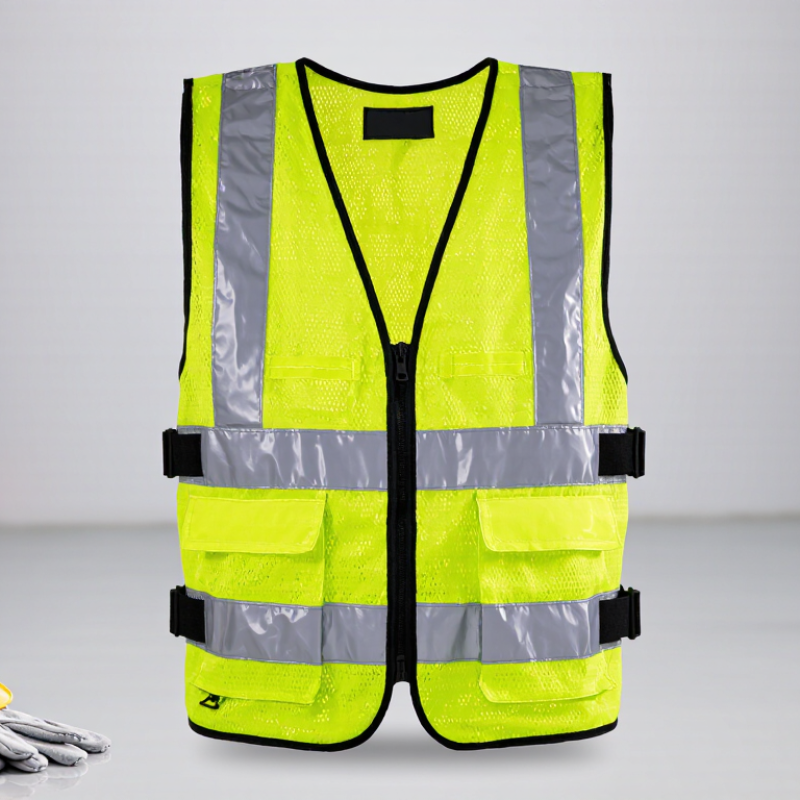
Assess Work-Zone Risk Under ANSI/ISEA 107-2020 Types R, P, and O
How to Choose the Right Mesh Reflective Vest?
Assess the work-zone risk before choosing a mesh reflective vest. ANSI/ISEA 107-2020 separates high-visibility garments into Types O, R, and P. The correct type depends on traffic exposure, lighting, work speed, and emergency duties. A breathable mesh design may improve comfort, but ventilation cannot replace required visibility materials. Check the garment label, performance class, and intended use carefully.
Type O suits off-road workers who face limited vehicle exposure, such as warehouse or construction-site personnel away from traffic. Type R is intended for roadway environments, where moving vehicles create greater danger. Class 2 supports many daytime and nighttime tasks, while Class 3 provides more body coverage for complex conditions. Type P serves public safety workers, including emergency or law-enforcement personnel managing traffic or incidents. The wrong category can leave a serious visibility gap.
Tips: Walk through the actual work area before buying. Note vehicle approach speeds, shadows, rain, and nighttime lighting. Select a vest that fits securely over work clothing without hiding reflective bands. Inspect mesh, seams, and retroreflective strips regularly. Replace damaged garments. Comfort matters, but it can mislead; a light vest may feel ideal while offering insufficient coverage. One practical mistake is judging visibility indoors. Test the vest from a distance, under headlights, and against the site’s background. A supervisor or safety professional should verify the final selection against workplace procedures and the standard’s labeling requirements.
Choose ANSI/ISEA 107 Visibility Class 1, 2, or 3 for the Task
How to Choose the Right Mesh Reflective Vest?
Choosing a mesh reflective vest starts with the work zone, not the fabric. ANSI/ISEA 107-2020 defines three visibility classes for different exposure levels. Class 1 suits low-risk areas with traffic below 25 mph and clear separation from vehicles. A parking attendant working on private property may need only this level. Class 2 provides more visible background and reflective material for road crews, delivery workers, and crossing personnel. It is often the practical choice for mixed traffic. Class 3 offers the highest conspicuity, especially where workers face fast traffic, darkness, or complex backgrounds. It usually involves enhanced coverage across the torso, arms, or legs.
Visibility is task-dependent. The Bureau of Labor Statistics reported that transportation incidents caused 38.2% of fatal occupational injuries in 2023. NHTSA recorded 7,522 pedestrian deaths in 2022, the highest number since 1981. These figures do not prove that one vest prevents every collision. They do show why class selection deserves careful attention. A lightweight mesh vest can improve airflow during summer work, but ventilation does not replace adequate reflective coverage. Check the vest’s label, material area, fit, and condition. Dirt, damaged tape, and loose closures reduce recognition at distance. I have seen workers choose Class 1 because it feels comfortable, then discover that passing headlights hide the vest’s details. That decision needs reconsideration. Select Class 2 or Class 3 when speed, darkness, weather, or moving equipment increases the visual challenge.
How to Choose the Right Mesh Reflective Vest?
Choose ANSI/ISEA 107 Visibility Class 1, 2, or 3 for the Task
ANSI/ISEA 107 visibility classes specify minimum areas of high-visibility background material and retroreflective material. Class 1 is intended for lower-risk activities away from moving traffic, Class 2 provides greater conspicuity for roadside or vehicle-exposure work, and Class 3 provides the highest visibility for complex work zones, poor visibility, or high-speed traffic. The figures shown are commonly referenced minimum material areas in square inches; always verify the current standard and garment configuration for the specific task.
Compare EN ISO 20471 Fluorescent Areas: 0.13, 0.50, and 0.80 m²
How to Choose the Right Mesh Reflective Vest?
The area figures need careful reading. Under EN ISO 20471:2013+A1:2016, 0.13 m² refers to retroreflective material, not fluorescent fabric. Class 2 requires at least 0.50 m² of fluorescent material and 0.13 m² of reflective material. Class 3 increases these figures to 0.80 m² and 0.20 m². These are tested minimums, not decoration.
Mesh construction can improve airflow, but it must not reduce certified coverage. Check the vest when worn over a jacket. Shoulder straps, pockets, logos, and open mesh sections may interrupt visible areas. The UK Health and Safety Executive advises selecting PPE according to workplace risk, visibility, fit, and compatibility with other equipment. A loose vest may twist during movement. That matters.
Think about the worksite. A 0.50 m² Class 2 vest may suit daytime road maintenance with clear separation from traffic. A 0.80 m² Class 3 garment provides more fluorescent coverage for complex traffic zones, darkness, or poor weather, when the risk assessment requires it. Reflective strips need direct light to work. Fluorescent fabric needs daylight or suitable illumination. Neither replaces lighting or traffic controls. Check the certificate and care label. I have seen teams focus on bright color while ignoring blocked reflective bands. That is an easy mistake. Mesh is cooler, but cooler is not automatically safer.
Check 50 mm Reflective Bands and 360° Visibility in the Design
How to Choose the Right Mesh Reflective Vest?
A mesh reflective vest should remain visible from every direction, not only from the front. This matters near traffic, loading areas, and poorly lit work zones. The NHTSA Traffic Safety Facts report recorded 7,522 pedestrian deaths in the United States in 2022. Visibility remains a serious safety concern.
Check the reflective bands carefully. ISO 20471 commonly uses 50 mm minimum widths for retroreflective material in high-visibility clothing designs. A band should sit across the chest, back, and shoulders, creating a continuous visual signal. Shoulder bands are especially useful when a worker turns or bends. Small gaps can weaken recognition.
Look for 360° visibility. Side panels, vertical strips, and contrasting fluorescent mesh help drivers identify body movement. The mesh should allow airflow while retaining its shape after washing. ANSI/ISEA 107-2020 also classifies garments by coverage and visibility performance, so the vest should match the work environment and traffic exposure.
Fit matters more than many buyers expect. A loose vest may twist, hiding the rear bands. I inspect the vest while walking, reaching, and carrying tools. That test is not perfect, but it reveals practical weaknesses. Bright color alone is not enough. Clean, undamaged reflective material performs more reliably. Surface dirt, fading, and broken stitching deserve immediate attention.
Verify Mesh Breathability, Fit, and Certified Care-Test Claims
A suitable mesh reflective vest should feel breathable before it looks impressive. Hold the fabric near a fan or gently blow through it. Open mesh should release heat across the chest, back, and underarms. Dense lining may trap sweat during long outdoor tasks. Check the reflective panels too. They should remain visible without covering most airflow areas. A vest can feel airy in a showroom, yet become uncomfortable after two humid hours.
Fit affects both comfort and visibility. Choose enough room for a shirt or light jacket, but avoid loose edges that catch on equipment. Walk, bend, and raise both arms before buying. The reflective strips should stay near the torso, not twist toward the sides. Inspect stitching around pockets and fastening points. I once underestimated shoulder movement; the vest looked correct but pulled sharply when reaching forward.
Tips: Ask for independent test reports, not only printed claims. Verify mesh breathability results and the test conditions used. For certified care-test claims, check washing temperature, drying method, and the number of tested cycles. Reflective performance can weaken after repeated washing. Follow the care label closely. If the seller cannot explain the certification body or test date, pause and request clearer evidence. Small details matter.
Conclusion
Choosing the right Mesh Reflective Vest begins with understanding the risks of the work zone. Assess whether the task involves traffic, low-light conditions, moving equipment, or public-road exposure, then select the appropriate ANSI/ISEA 107-2020 garment type: Type R for roadway environments, Type P for public safety activities, or Type O for off-road occupations. Next, match the visibility class to the task, from Class 1 for lower-risk situations to Class 3 for complex, high-risk environments requiring greater body coverage.
Also consider EN ISO 20471 requirements for fluorescent material, including the available areas of 0.13, 0.50, and 0.80 square meters. The vest should use properly positioned 50 mm reflective bands and provide 360° visibility from multiple angles. Finally, evaluate mesh breathability, comfortable fit, freedom of movement, and clear care-test or certification claims. A well-designed vest should remain visible, wearable, and effective throughout the working day when maintained according to its care instructions.

 Xintuo